
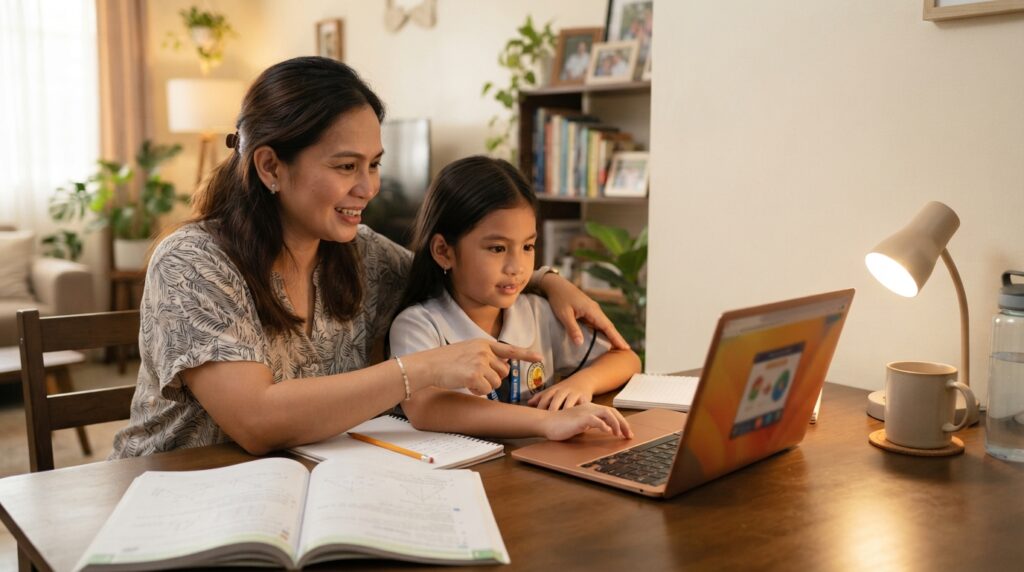
Artificial intelligence is part of many children’s school and online lives. They may use it for a story idea, a difficult word, an image, or homework. That is why AI literacy for kids matters. It means using technology with privacy, honesty, and critical thinking.
For Filipino parents, start with one rule: AI can help me think, but it cannot think for me. AI can produce fast answers, but it can make mistakes or sound confident when wrong. Children need adults who show them how to pause, check, and ask better questions.
UNICEF’s child-centred AI guidance highlights safety, privacy, transparency, responsible practice, and preparing children for AI. UNESCO’s education guidance calls for privacy protection and age-appropriate, human-centred use. These principles give families direction as tools change quickly.
Featured Image here
What AI Literacy Means at Home
AI literacy means understanding that AI is a tool, not a person or an all-knowing source. It means knowing what it can help with, what it cannot do, and when to ask a real adult. An answer may be incomplete, biased, or inaccurate.
Explain AI in age-appropriate language. For younger children: “It is a computer tool that can make words and pictures, but it can make mistakes.” For older children, explain that AI finds patterns in information. It does not automatically know what is true, fair, current, or right for your family.
Keep the goal human
AI should support learning, not replace a child’s voice, questions, or effort. A child can brainstorm ways to begin a story, then write their own version. They can ask for a simple science explanation, then confirm it with a textbook or teacher. This protects the essential skill: learning how to think.
AI literacy fits naturally with 5 Essential Life Skills Every Filipino Child Needs in 2026. It builds judgment, responsibility, and independence.
Teach the Pause, Compare, Ask Habit
Give children one repeatable routine: Pause, Compare, Ask. It works for homework, a funny AI image, a news claim, or an answer that seems too perfect.
Pause before believing or sharing
Teach your child to pause when an AI answer feels dramatic, strange, or too easy. Ask: “Where might this have come from?” and “Could this be wrong?” A pause comes before believing or forwarding it.
Compare with a trusted source
Compare important information with a school book, teacher’s instructions, library source, official organization, or credible reference. For schoolwork, the teacher’s guidance comes first. A child should never submit an AI answer as their own simply because it sounds polished.
Ask a real person when unsure
Encourage your child to ask a parent, teacher, librarian, or trusted adult when something is confusing or important. This is especially necessary for health, money, safety, legal questions, or distressing topics. AI is not a substitute for qualified support.
Protect Privacy Before Typing
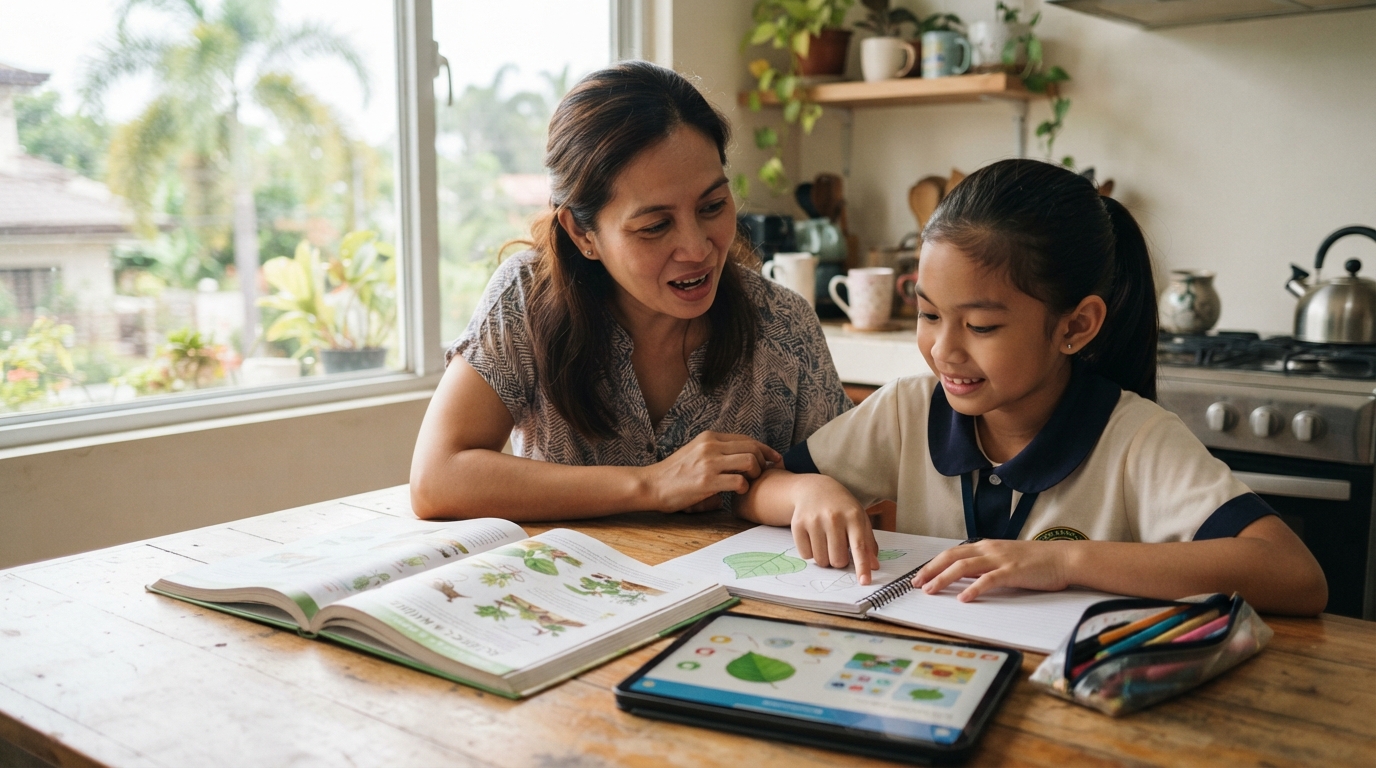
One AI rule is simple: do not paste private information into a chatbot or image tool. UNICEF identifies children’s data and privacy as a core protection. Before using an AI service, review age requirements, privacy settings, and school policy together.
Teach children not to share their full name, home address, phone number, passwords, precise location, school ID, daily schedule, private photos, family financial information, or another person’s details. Do not upload a classmate’s photo or schoolwork without permission. Ask: “Would I be comfortable if this appeared in public?” If not, do not upload it.
Create a privacy-before-prompt check
Before pressing send, ask: Is this private? Does it belong to someone else? Do I need a parent or teacher to approve it? Make this a routine, not a punishment, so your child feels safe coming to you after a mistake.
For guidance on deepfakes, scams, risky chats, and reporting concerns, read How to Protect Your Kids from AI Online Dangers. That article covers online risks; this one covers thoughtful AI use for learning.
Set Clear Rules for Homework
Homework rules should protect learning and honesty. Before a child uses AI for schoolwork, check the teacher’s and school’s policy. A useful family standard is that AI may help a child understand, practise, or improve work, but it should not do the thinking or final writing.
Good uses include practice questions, a simpler explanation after reading the lesson, report headings, or checking a draft for clarity. Less appropriate uses include copying a finished essay, submitting generated answers without review, or inventing sources and quotations.
Keep the child’s learning visible
Encourage your child to keep notes, drafts, and their own explanations. After using AI, ask them to explain the topic in their own words. If they cannot explain it, the tool has not helped them learn yet. When a teacher requires disclosure of AI help, follow that instruction.
Responsible and ethical AI use is already a Philippine school conversation. DepEd Region VIII posted a 2026 memorandum for AI capacity building in basic education. It is regional, not universal, but it reinforces why families should ask teachers before assuming what is allowed.
Choose Age-Appropriate Family Boundaries
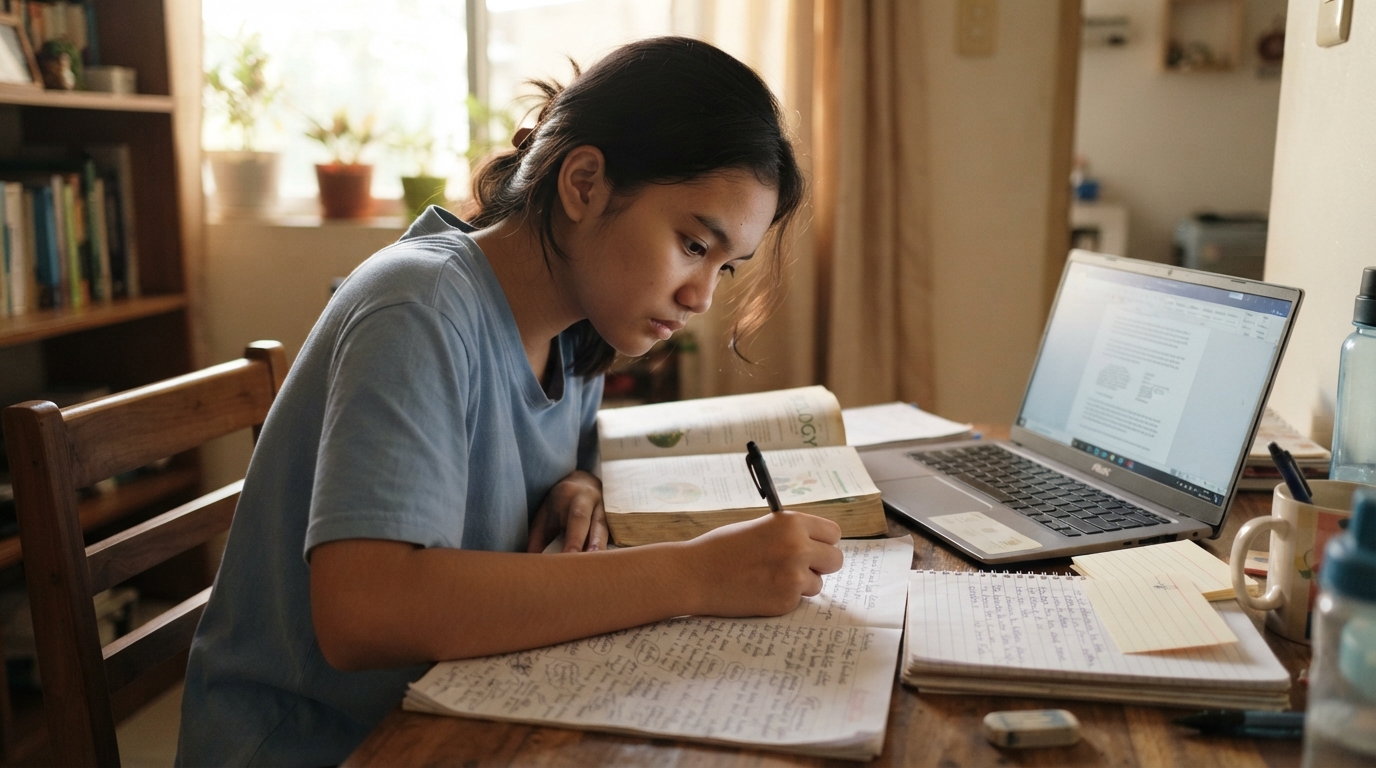
There is no single AI rule for every age. Young children need close adult supervision and should not use open-ended tools independently. Elementary-aged children can practise safe questions with an adult nearby. Teens may need more independence, but still need privacy, integrity, and verification rules.
Set boundaries around where, when, and how AI can be used. Keep devices in shared spaces when practical. Agree on allowed tools, adult supervision, off-limits topics, and what to do when an answer feels uncomfortable. Review the rules as platforms change.
Connect AI rules to screen habits
AI use is still screen use, so it benefits from family routines around rest, meals, schoolwork, and face-to-face connection. Build these limits alongside Screen Time and Kids: What Every Filipino Mom Needs to Know in 2025. The focus is balance, not a ban on every digital tool.
Practise With Everyday Questions
The best way to build AI literacy is to practise together. Choose a low-stakes question, such as “What are three ways to reduce food waste at home?” Read the answer with your child. Ask which parts sound useful, which need checking, and how the advice would work at home. Then find one trusted source before acting.
Compare an AI-created image with a real photograph and ask what clues suggest that it may be generated. Discuss why someone might make a misleading image and why it is important not to share it immediately.
Build Trust, Not Fear
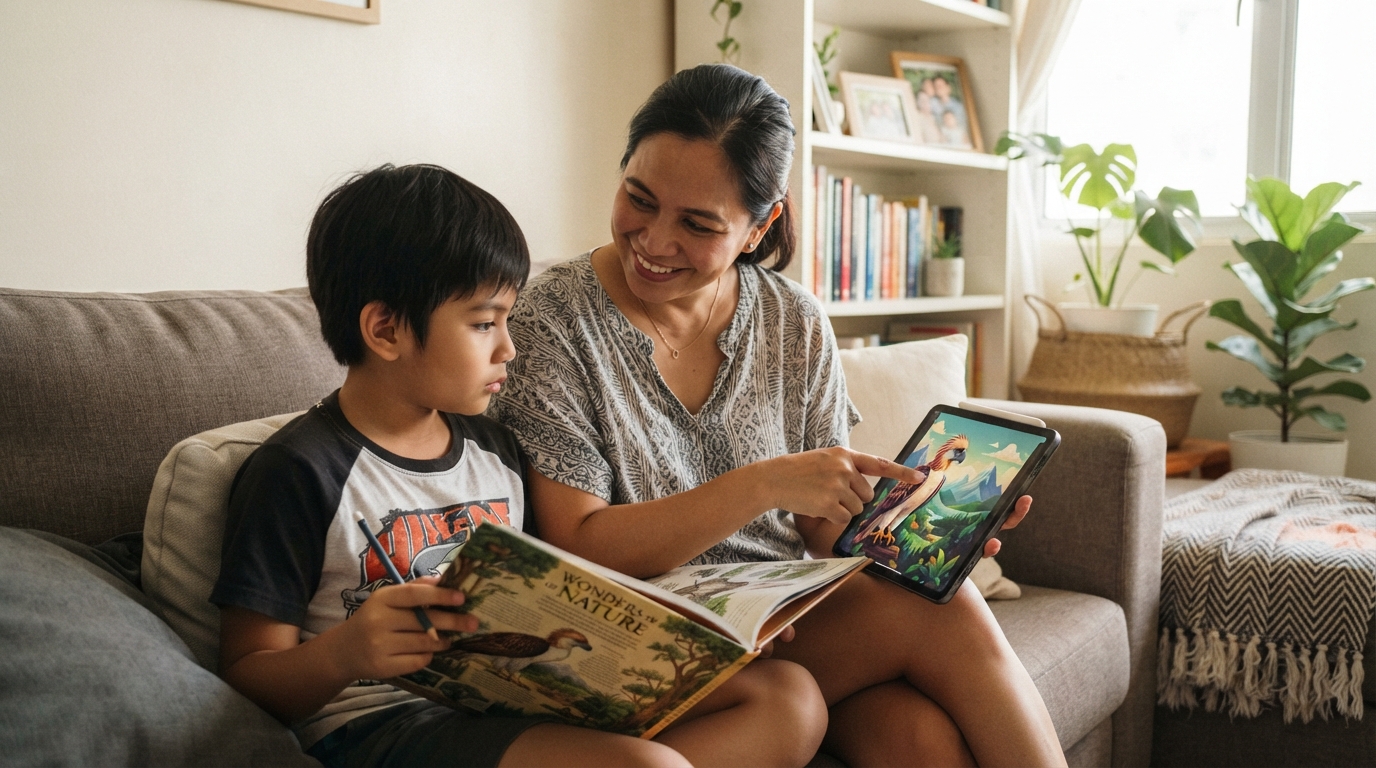
Children will make mistakes online. The goal is to make sure they tell you early. Let them know they will not automatically lose their device for asking a question, seeing something odd, or sharing information by accident. Start with calm support, then solve the problem together.
AI literacy is not about raising perfect digital citizens. It is about raising children who can pause, protect privacy, check important claims, respect school rules, and ask for help. With regular conversations and simple boundaries, Filipino families can make AI a learning tool while keeping human judgment at the centre.