
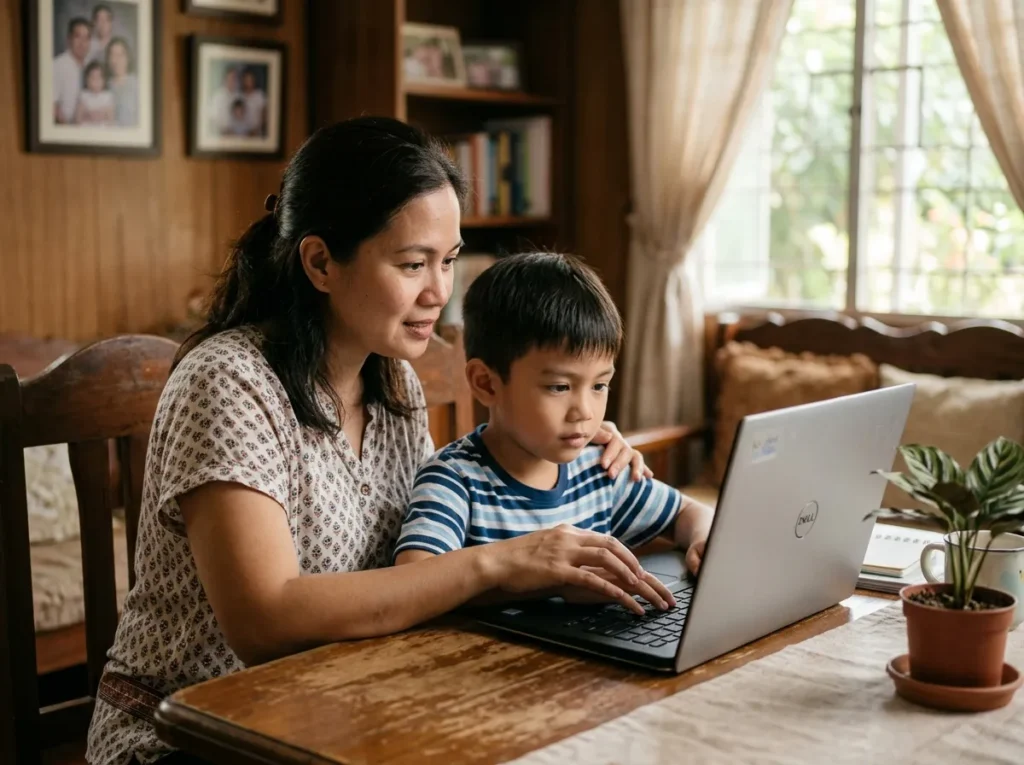
Bilang isang Filipino mom, alam mo na ang internet ay bahagi na ng buhay ng iyong mga anak. Ginagamit nila ito para sa school, para makipagkaibigan, para maglaro — at ngayon, para makipag-ugnayan sa AI. But here’s the thing: not all of the internet is safe, and AI is making the dangers harder to spot.
In 2026, the online threats facing Filipino children are no longer just about strangers in chat rooms or inappropriate websites. Artificial intelligence has changed the game entirely — from AI-generated fake images to chatbots that pretend to be friends. As a mom, it can feel overwhelming to keep up.
This guide breaks it all down in a way that is clear, practical, and tailored specifically for Filipino families. Because your anak deserves a safer digital world — and you deserve to feel confident protecting them.
Why Filipino Children Are Especially Vulnerable Online
The Philippines consistently ranks among the top countries in the world for internet usage and time spent on social media. Filipino children are online earlier, longer, and more frequently than many of their peers in other countries. And while that connectivity brings real benefits — online learning, creativity, global friendships — it also opens doors to real risk.
What makes the situation more urgent is the rise of generative AI — technology that can create realistic images, videos, voices, and even full conversations that did not previously exist. These tools are now widely accessible, often free, and increasingly used to target children.
A report from Rappler and Plan International Pilipinas found that AI-enabled child exploitation in the Philippines has grown significantly — and girls are disproportionately targeted. Predators no longer need to meet children in person. The danger is now digital, silent, and hiding in plain sight.
What AI Online Dangers Look Like Today
Before you can protect your child, you need to understand what you are protecting them from. These are the most common AI-driven threats Filipino children face right now.
Deepfakes and Non-Consensual Images
Deepfakes are AI-generated images or videos that realistically alter or fabricate a person’s appearance. In early 2026, a major social media platform briefly allowed users to digitally alter photos of real people — including minors — without their consent. Many of these images spread across the internet before anyone could stop them.
If your child posts photos on social media, their image can potentially be used and altered by anyone with access to these tools. This is one of the most serious risks facing young Filipinas online today.
Predatory AI Chatbots
There are chatbots online — some on platforms that look harmless and fun — that are specifically designed to simulate friendship with children. These bots build trust over time, ask personal questions, and can subtly guide children toward sharing information or images they should never share with anyone.
Children often do not realize they are talking to a machine, not a person. And sometimes, the conversations are monitored by a real predator on the other end.
AI-Powered Grooming and Scams
Cybercriminals now use AI to craft more convincing and personalized messages. Where old-fashioned phishing emails were easy to spot, today’s AI-generated messages can mimic the tone, name, and even writing style of someone your child already trusts — a classmate, a teacher, or a family member.
These messages are used to manipulate children into clicking dangerous links, sharing passwords, or even leaving home to meet someone.
Misinformation and Manipulated Content
AI can generate fake news articles, fake celebrity endorsements, and fabricated videos that look completely real. Children who are still developing critical thinking skills are especially vulnerable to believing and sharing this kind of content — which can lead to real-world harm.
How to Have the Talk With Your Child

One of the most powerful things you can do as a Filipino mom is simply talk openly with your children about what they encounter online. Many parents avoid this conversation because they feel they do not know enough about technology. But you do not need to be a tech expert — you just need to be present and honest.
For Young Children (Ages 5 to 9)
Keep it simple. Teach them the concept of “private” — that certain parts of their body, their home, and their personal information are private and not for sharing with anyone online. Use the phrase: “If it feels strange or scary online, you tell Mommy right away.” No questions, no judgment, just safety.
You can also tie this into life skills you are already teaching them. If you have read our article on essential life skills every Filipino child needs in 2026, online awareness fits perfectly alongside those lessons in responsibility and good judgment.
For Older Children and Tweens (Ages 10 to 13)
At this age, children are starting to use social media, gaming platforms, and messaging apps — often with more independence. Explain what deepfakes are in simple terms: “AI can take your photo and change it to look like something you never did.” Show them examples of how realistic these fakes can be.
Teach them to never share photos with people they have not met in real life — not even photos of their school uniform, their street, or their daily routine. A predator can piece together a child’s location and schedule from small details.
For Teenagers (Ages 14 and Up)
Teens need honesty and respect, not just rules. Share with them what is really happening — the statistics, the real cases from the Philippines, the fact that even smart, careful people can be targeted. Help them understand that being victimized is never their fault, and that speaking up is always the right move.
Discuss consent: their image belongs to them, and no one has the right to alter or share it without their permission. Encourage them to come to you — without fear of losing their devices — if something online ever makes them feel uncomfortable.
Raising emotionally aware children also helps here. Our guide on mindful parenting and fostering emotional intelligence offers deeper insights on building the trust and openness that makes these conversations possible.
Practical Tools and Rules Every Filipino Family Needs
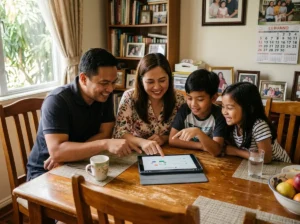
Conversations are essential — but so are practical safeguards. Here are concrete steps you can take right now to reduce your child’s exposure to AI-driven online dangers.
Set Up Parental Controls
Most devices — iPhones, Android phones, tablets, and laptops — have built-in parental control features. These allow you to restrict access to certain apps, set daily screen time limits, and monitor what your child is downloading or viewing.
- Apple devices: Go to Settings > Screen Time to set up content restrictions and app limits.
- Android devices: Use Google Family Link to manage your child’s account, approve app downloads, and see their location.
- YouTube: Switch to YouTube Kids for children under 12, and enable Restricted Mode for older children.
Create a Family Media Agreement
A family media agreement is a simple, written set of rules that everyone in the household agrees to follow. It covers things like:
- Which platforms and apps are allowed
- How many hours per day screens can be used
- Screen-free zones (bedrooms, dinner table)
- What to do if they encounter something disturbing online
Involve your children in creating these rules — they are far more likely to follow guidelines they helped shape. The Common Sense Media family media agreement template is a free, trusted resource you can adapt for your family.
Know the Platforms Your Child Uses
Download the apps your child uses and explore them yourself. Look for privacy settings, direct messaging features, and what kind of content is publicly visible. Many Filipino parents are surprised to discover how easily strangers can contact their children through popular gaming and social apps.
Check privacy settings regularly — platforms update their policies often, and a setting that was safe last year may have changed.
Keep Devices in Common Areas
This is simple but effective: no phones or tablets in bedrooms at night. When devices are used in shared spaces — the sala, the dining area — children are far less likely to engage in risky behavior online, and far more likely to ask for help if something feels wrong.
What to Do If Your Child Has Been Targeted
Even with all the right precautions, things can still go wrong. If your child comes to you and says something disturbing has happened online — stay calm. Your reaction in the first moment will determine whether they ever come to you again.
Do not take the device away immediately. That sends the message that they will be punished for being honest. Instead, thank them for telling you, reassure them that it is not their fault, and take these steps:
Document and Report
Take screenshots of all conversations, images, or accounts involved before anything is deleted. Then report the account or content directly to the platform using the in-app reporting feature.
For serious cases involving sexual content, exploitation, or threats, you can report to the Philippine National Police Anti-Cybercrime Group (PNP-ACG), which handles online crimes against children. You can file a report online or visit their office directly.
Seek Support
Experiencing online harassment or exploitation is traumatic. Do not try to handle it alone. Reach out to a trusted professional — a guidance counselor, a psychologist, or a child protection advocate — who can help your child process what happened without shame or blame.
As a mom, lean on your own support network too. Being a protector does not mean carrying the weight alone. Our article on why self-care is crucial for every mom is a reminder that your well-being matters just as much as your child’s.
Raising Digitally Resilient Children in the Philippines
Protecting your child online is not about taking away technology — it is about raising a child who knows how to navigate it wisely. The goal is not to make them afraid of the internet, but to make them confident, aware, and unafraid to ask for help.
Filipino moms have always been the heart of the home. In 2026, that role extends to the digital world too. You do not need to be a cybersecurity expert. You just need to be informed, present, and willing to keep the conversation going — kahit minsan mahirap at uncomfortable.
Your child’s safety is always worth that conversation.