
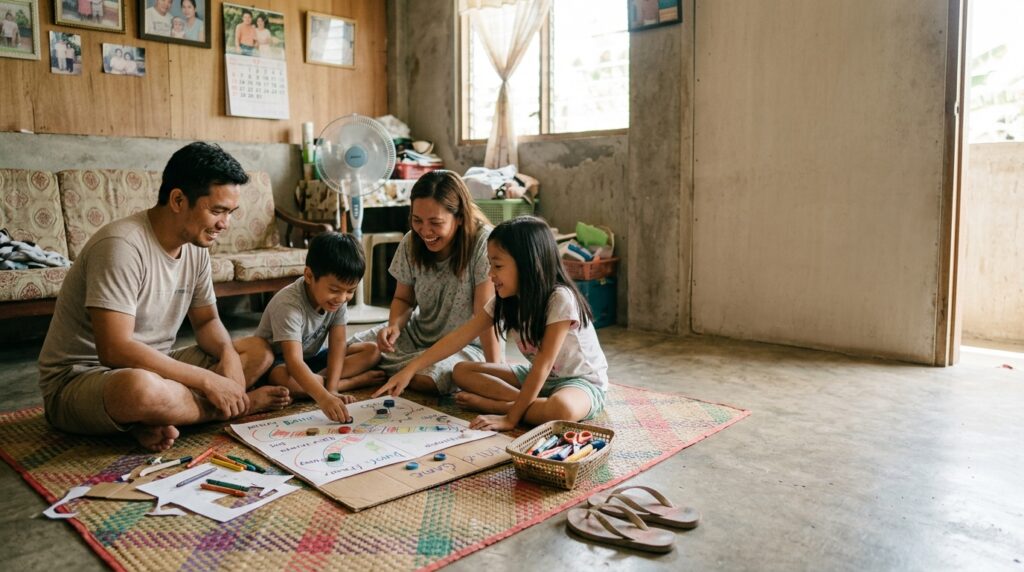
When screens are part of school, work, communication, and rest, a screen-free day can sound unrealistic. The goal is not to ban every gadget. It is to create small pockets of real connection that fit a Filipino family’s life.
This 30-day screen-free family playbook gives you one low-cost idea each day. Most need household items, a few minutes, and willingness to join in. A 2026 Pinterest report found that searches for screen-free activities rose 200 percent year over year, while searches for family tradition ideas also rose 200 percent. That interest shows why repeatable offline activities are worth planning. Read the Pinterest Parenting Trend Report 2026 for the source.
Choose the days that suit your family. If a day is too busy, repeat an easy favorite. The aim is a family habit that makes room for talking, moving, laughing, helping, and creating together.
Set Up a Realistic 30-Day Plan
Before Day 1, hold a short family huddle. Explain that this is a 15 to 30 minute daily experiment in having fun together, not a punishment for gadgets. Let children help choose the time, such as after merienda, before dinner, or on a weekend morning.
Keep a small activity basket in the sala with paper, crayons, tape, old magazines, bottle caps, string, cards, and a notebook. These supplies support many activities below. For extra ideas on device routines, visit Screen Time and Kids What Every Filipino Mom Needs to Know in 2025.
Make the challenge feel inviting
Use a paper calendar and let children mark each day with a drawing or sticker. Keep the rule simple. Everyone puts devices aside for the activity, except when a phone is needed for an emergency. Adults count too.
Days 1 to 7 Start Small at Home
- Day 1 Make a family name banner. Each person adds one drawing that shows something they enjoy.
- Day 2 Play a five-minute sala scavenger hunt. Find something soft, round, blue, useful, and older than the child.
- Day 3 Cook a simple merienda together. Let children wash fruit, stir, arrange plates, or count ingredients safely.
- Day 4 Try a bottle-cap counting game. Sort by color, make patterns, or use them as counters for a homemade board game.
- Day 5 Create a family story circle. One person begins with one sentence, then each person adds the next part.
- Day 6 Have a music-and-movement break. Take turns choosing a song and copying one another’s dance move.
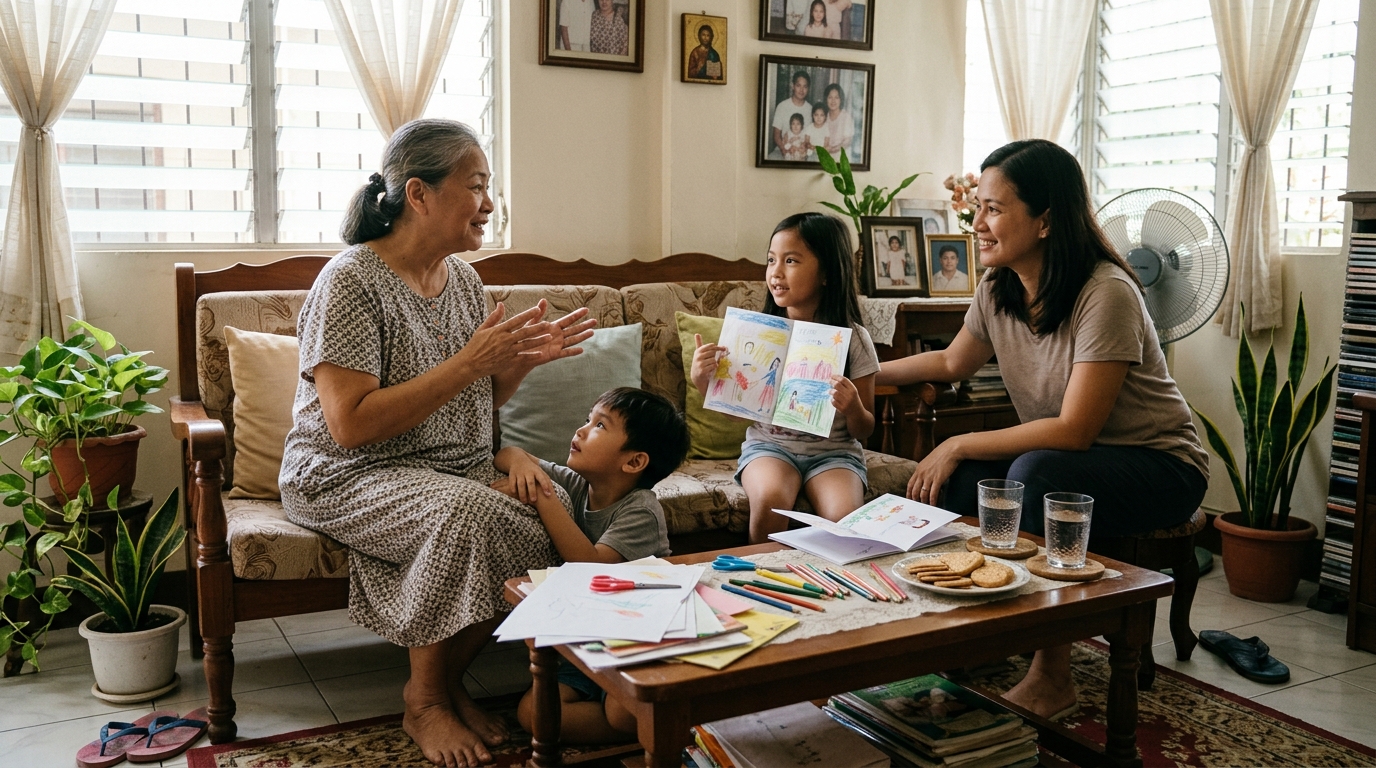
- Day 7 Invite a lolo, lola, tita, or tito to share a childhood game or memory. Write down one detail everyone wants to remember.
These first activities prove that connection does not require special toys or a big budget. Give children an age-appropriate job and praise participation. This is also a natural way to practise presence and listening skills in Mindful Parenting for Filipino Moms and How to Foster Emotional Intelligence.
Days 8 to 14 Add Movement and Discovery
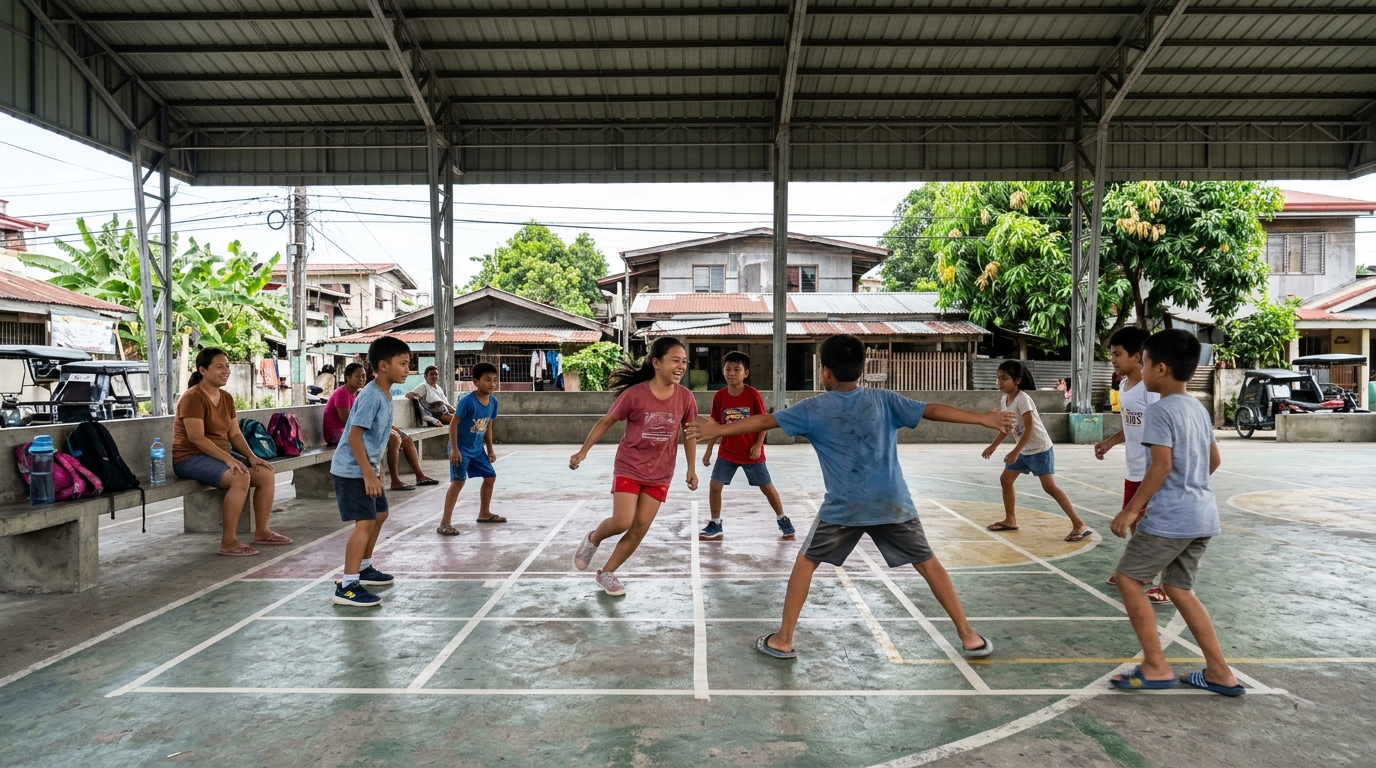
- Day 8 Adapt patintero for your available space. Use masking tape lines indoors or chalk outside and keep the pace safe.
- Day 9 Go on a short nature-noticing walk. Look for five leaf shapes, three bird sounds, and one place that needs care.
- Day 10 Build an indoor obstacle course with pillows, chairs, and tape lines. Keep it low, clear, and supervised.
- Day 11 Play charades using Filipino animals, jobs, foods, or favorite family memories.
- Day 12 Make a rainy-day fort with blankets and chairs, then read aloud or tell stories inside.
- Day 13 Try a safe tumbang preso style game using a soft ball and an empty plastic container in an open area.
- Day 14 Plan a backyard, balcony, or windowsill plant check. Water a plant, observe changes, or start seeds if available.
Movement, imaginative play, and time outdoors have a place in a balanced childhood. The World Health Organization physical activity and sedentary behaviour guidance supports regular age-appropriate activity and reducing sedentary time. Adapt activities to your child’s age, abilities, space, and weather.
Days 15 to 21 Build Skills and Family Pride
- Day 15 Let children help set the table and make a simple place-card drawing for each family member.
- Day 16 Hold a paper-airplane test. Change one fold at a time and talk about what made each plane fly differently.
- Day 17 Make a family gratitude jar. Everyone writes or draws one good moment from the day.
- Day 18 Turn laundry into a matching challenge. Pair socks, sort light and dark items, or fold small towels together.
- Day 19 Play a market game. Use pretend money and household items so children can practise choosing, counting, and taking turns.
- Day 20 Create a mini art gallery from recycled paper, boxes, and magazine cutouts. Each artist explains one piece.
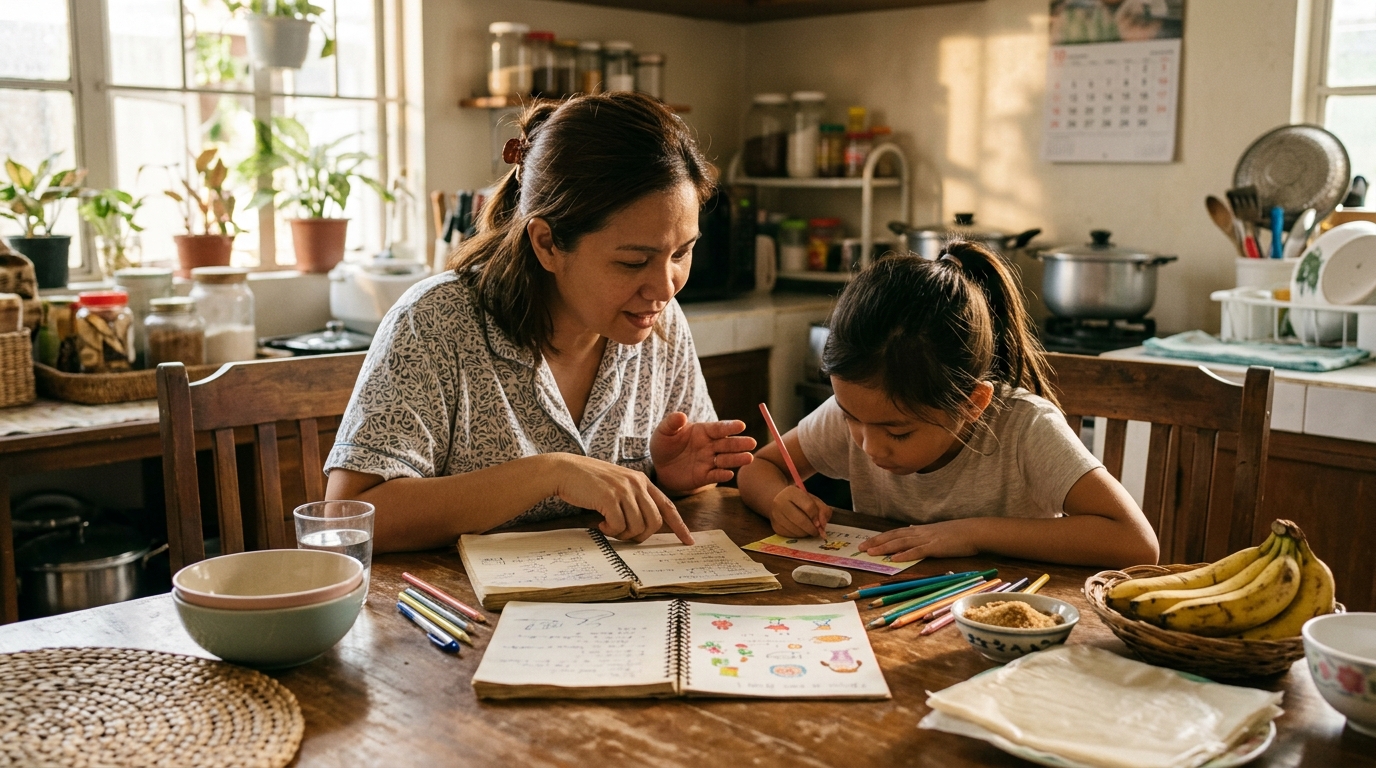
- Day 21 Make a family recipe card. Ask a relative about one favorite dish and record the ingredients, steps, and story behind it.
Life skills can feel more meaningful when shared instead of assigned as a chore. Cooking, sorting, counting, and caring for a home help children see that they are valued contributors. For more ideas, link your readers to 5 Essential Life Skills Every Filipino Child Needs in 2026.
Days 22 to 30 Create Traditions Worth Repeating
- Day 22 Make a family question bowl. Include prompts such as “What made you laugh today?” and “What should we try next weekend?”
- Day 23 Have a no-screen merienda picnic on a mat in the sala, balcony, or shaded outdoor space.
- Day 24 Play sungka if you have one, or create a simple version with egg cartons and counters.
- Day 25 Do one kind act together, such as preparing a note for a relative or helping tidy a shared area.
- Day 26 Hold a flashlight story night. Turn down the lights, use safe battery lights, and let each child tell a short tale.
- Day 27 Create a memory map of your neighborhood. Draw favorite places, safe routes, and people who make the community feel welcoming.
- Day 28 Make homemade awards for kindness, teamwork, helpfulness, or creativity and present them after dinner.
- Day 29 Choose one favorite activity from the month and let the children teach it to another family member.
- Day 30 Celebrate with a family reflection. Ask what felt fun, what felt difficult, and which three activities should become regular traditions.
Turn Small Moments Into Family Rituals
At the end of the month, you do not need to keep all 30 activities. Choose three your family enjoyed. You might keep a Friday story circle, Sunday merienda picnic, or short post-dinner walk. Repetition turns an activity into a ritual.
Screen-free family time does not mean screens are always bad. UNICEF’s screen-free activities for children resource encourages whole-family play as part of healthy digital habits. The aim is balance: technology for school, connection, and entertainment, alongside real conversation, movement, creativity, and rest.
Start with one day. Keep it simple. When the activity is imperfect but everyone is laughing, talking, or trying again, it is already doing its job.