
Why Life Skills Matter More Than Ever in 2026
As a Filipino mom, you’ve probably heard the stories — college students who don’t know how to cook a simple meal, young adults who panic when they need to schedule a doctor’s appointment, or teenagers who’ve never done their own laundry. These aren’t isolated incidents; they’re symptoms of a growing gap between what schools teach and what real life demands. In 2026, parenting experts and child development specialists are sounding a clear message: teaching life skills is just as important as academic achievement.
The shift is happening because parents are recognizing something crucial. When children master practical, everyday skills, they develop confidence, resilience, and independence — qualities that no standardized test can measure. For Filipino families, where values like self-reliance and family contribution run deep, teaching life skills becomes a way to honor our cultural heritage while preparing our children for success in an increasingly complex world.
This guide explores five essential life skills every Filipino child should master by 2026, along with practical strategies for teaching them at home.
1. Basic Cooking and Food Preparation
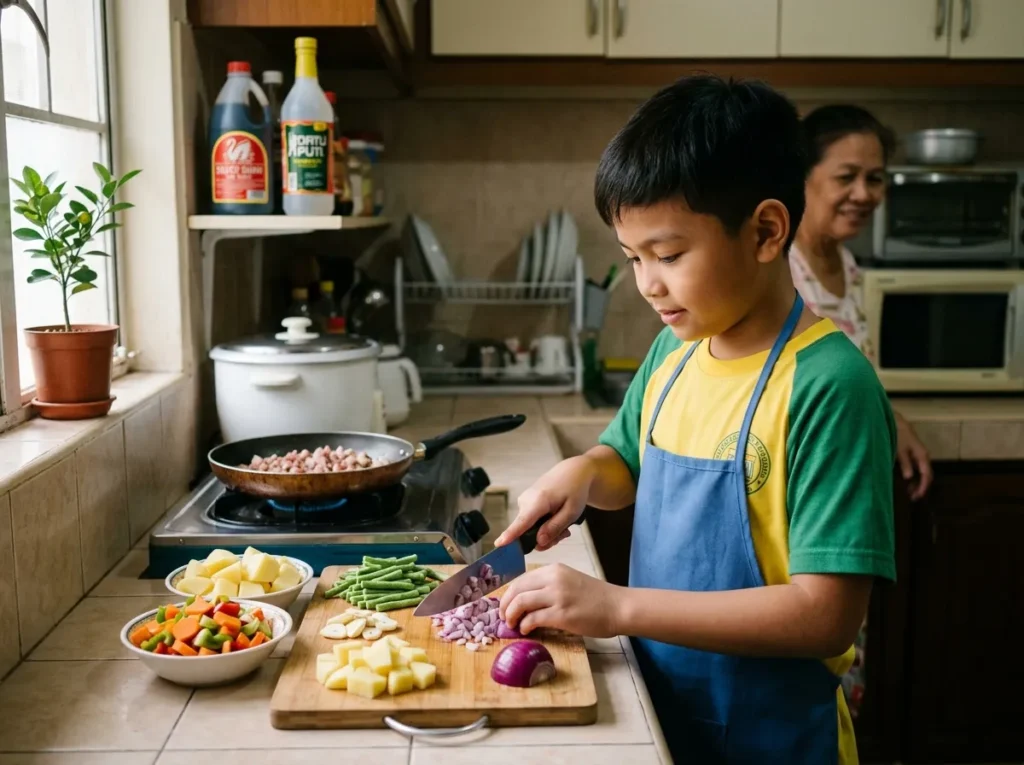
Cooking is more than just preparing meals — it’s a foundational life skill that teaches math, chemistry, cultural appreciation, and self-sufficiency all at once. In Filipino households, where food is central to family and celebration, teaching children to cook is particularly meaningful.
Why Cooking Matters
When children learn to cook, they understand nutrition, budgeting, and meal planning. They gain confidence knowing they can feed themselves. For Filipino kids, cooking traditional dishes connects them to their heritage and family history. A child who can prepare adobo, sinigang, or pancit isn’t just learning a recipe — they’re preserving family traditions and developing cultural pride.
How to Teach It
Start with simple tasks appropriate to their age. Toddlers can wash vegetables; elementary-aged children can mix ingredients and help with safe cutting tasks; teenagers can plan and prepare entire meals. Make it a bonding experience by cooking together on weekends. Let them choose a family recipe to master, and celebrate when they successfully prepare it for the family.
According to the American Heart Association, children who help prepare meals are more likely to make healthier food choices and develop positive relationships with food.
2. Financial Literacy and Money Management
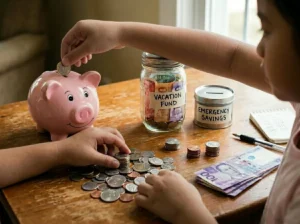
Money management is a life skill that determines much of your child’s future success, yet many parents avoid teaching it. In 2026, financial experts emphasize that children as young as five can begin learning basic money concepts.
Essential Money Concepts for Kids
Children need to understand that money is earned through work, that choices involve trade-offs, and that saving requires discipline. For Filipino families, where many parents sacrifice to provide for their children, teaching kids to value money and use it wisely honors that sacrifice.
Age-Appropriate Teaching Strategies
Young children (5-8 years) can learn through an allowance system tied to chores. Elementary-aged kids can start a savings goal — perhaps saving for a toy or experience. Teenagers should understand budgeting, the basics of credit, and how to earn money through part-time work or freelancing. Your existing article on Financial Literacy for Filipino Moms provides excellent frameworks you can adapt for children.
Research from the National Foundation for Credit Counseling shows that children who receive financial education are significantly more likely to have good credit scores as adults.
3. Basic Household Management and Cleaning
Knowing how to clean, do laundry, and maintain a living space is fundamental to independence. Yet many children reach adulthood without these skills, leading to stress and overwhelm when they move out.
Why Household Skills Build Confidence
When a child successfully cleans their room, does their own laundry, or helps prepare the home for guests, they experience tangible accomplishment. They see the direct result of their effort. This builds self-efficacy — the belief that they can handle life’s challenges.
Teaching Household Responsibilities

Create a chore chart that matches each child’s age and ability. Young children can put toys away and help with simple tidying. Elementary-aged kids can load the dishwasher, sweep, and fold laundry. Teenagers should be able to do laundry independently, clean bathrooms, and manage their own space. Make expectations clear, and praise effort and improvement rather than perfection.
4. Emotional Regulation and Conflict Resolution
In a world of increasing stress and social complexity, emotional intelligence is perhaps the most valuable life skill. Children who can identify their emotions, calm themselves when upset, and resolve conflicts respectfully will thrive in any situation.
Teaching Emotional Awareness
Help your child name their emotions: “I notice you seem frustrated. Is that right?” Validate their feelings without necessarily accepting their behavior: “It’s okay to feel angry, but it’s not okay to hit your sister.” Teach simple calming techniques like deep breathing, counting to ten, or taking a break.
Conflict Resolution Skills
When conflicts arise — with siblings, friends, or peers — use them as teaching moments. Help your child understand the other person’s perspective, express their own needs clearly, and brainstorm solutions together. Your article on Mindful Parenting for Filipino Moms offers excellent strategies for this.
According to the American Psychological Association, children who develop strong emotional regulation skills have better academic performance, healthier relationships, and improved mental health outcomes.
5. Problem-Solving and Decision-Making
Life is full of unexpected challenges. Children who can think critically, consider options, and make thoughtful decisions will navigate adulthood with greater confidence and resilience.
Creating Problem-Solving Opportunities
Don’t immediately solve every problem your child faces. Instead, ask guiding questions: “What do you think might happen if you try that?” or “Can you think of another way to handle this?” Let them experience natural consequences (within safe limits) so they learn from their choices.
Teaching Decision-Making
Give children age-appropriate choices and let them experience the outcomes. A young child might choose between two outfits; an older child might decide how to spend their allowance; a teenager might plan their weekend schedule. As they make small decisions successfully, they build confidence for larger ones.
Building These Skills Takes Time and Patience
Teaching life skills requires patience. Your child won’t cook the first time perfectly, fold clothes neatly immediately, or manage emotions flawlessly. That’s completely normal. What matters is consistent practice and your encouragement along the way.
In Filipino culture, we have a beautiful concept of kapwa — shared humanity and mutual responsibility. Teaching children life skills embodies this value. We’re not just preparing them to survive independently; we’re teaching them to contribute to their families and communities, to understand that their actions affect others, and to take responsibility for their role in the household and society.
As you work on these five essential skills, remember that you’re not aiming for perfection. You’re aiming for progress. Each skill your child masters is one more tool they’ll carry into adulthood, one more reason to believe in their own capability, and one more way they’ll be prepared to handle whatever 2026 and beyond brings.
Start Small, Build Big
You don’t need to tackle all five skills at once. Choose one to focus on this month. Make it fun, make it family-centered, and celebrate the small victories. Your children will thank you — maybe not today, but certainly when they’re managing their own households and realizing how grateful they are for what you taught them.