
Why Screen Time Has Become Every Filipino Mom’s Biggest Concern
Hindi mo mapigilan. Ang bata mo ay nakaupo sa sofa, ang mga mata ay nakapako sa screen, at halos hindi na tumutugon kahit tawagin mo. Sounds familiar, ‘di ba? If you are a Filipino mom raising kids in 2025, screen time is probably one of the most stressful topics you deal with on a daily basis — and you are definitely not alone.
The Philippines is among the highest internet-using countries in the world, and our children are growing up surrounded by smartphones, tablets, and streaming platforms from the moment they can hold an object in their hands. A recent study found that the average Filipino child spends approximately 34 hours per week in front of digital screens for entertainment alone — two hours higher than the global average. That is nearly five hours every single day, and that number does not even count screen time for schoolwork.
But the bigger question is not just how much screen time is too much. It is also about what it is doing to your child’s brain, language skills, social development, and emotional health — and what you, as a mama, can realistically do about it in a household where gadgets are part of everyday life.
This guide is written specifically for Filipino moms who want honest, practical, and research-backed answers. We will walk through the real effects of excessive screen time on Filipino children, what the official guidelines recommend, the warning signs to watch for, and concrete steps you can take at home — without feeling like a strict, screen-banning villain in your own family.
What the Research Says About Filipino Children and Screen Time
While global studies on screen time are widely available, there is now local research that speaks directly to the Filipino context — and the findings are worth knowing as a parent.
The Philippine Pediatric Society Guidelines
The Philippine Pediatric Society, following the guidelines of the American Academy of Pediatrics, recommends the following screen time limits for children:
Under 18 months: Screen time for video chatting only — such as video calls with a parent who is away or with lolo and lola in the province.
18 to 24 months: Limited to watching educational programming with a caregiver, no more than 1 hour per day. The key word here is with — solo screen time at this age is discouraged.
2 to 5 years old: No more than 1 hour per weekday and 3 hours on weekends of non-educational screen time.
6 years and older: Screen time should be kept to less than 2 hours per day outside of schoolwork, paired with daily physical activity and proper sleep.
What a Filipino Study Found About Toddlers and Screens
A landmark study published in BMC Public Health and conducted on Filipino children aged 24 to 36 months found that children who spent more than 2 hours daily on screens showed measurable decreases in both receptive and expressive language scores. Simply put, too much screen time was linked to slower language development in Filipino toddlers.
The study also revealed something especially important for Filipino moms to hear: children were 8.56 times more likely to engage in excessive screen use when they were watching alone — compared to watching with a parent or sibling. And children were over 4 times more likely to have excessive screen habits when their parents themselves had high screen use. Your habits, ina, are shaping theirs.
How Excessive Screen Time Affects Your Child’s Development
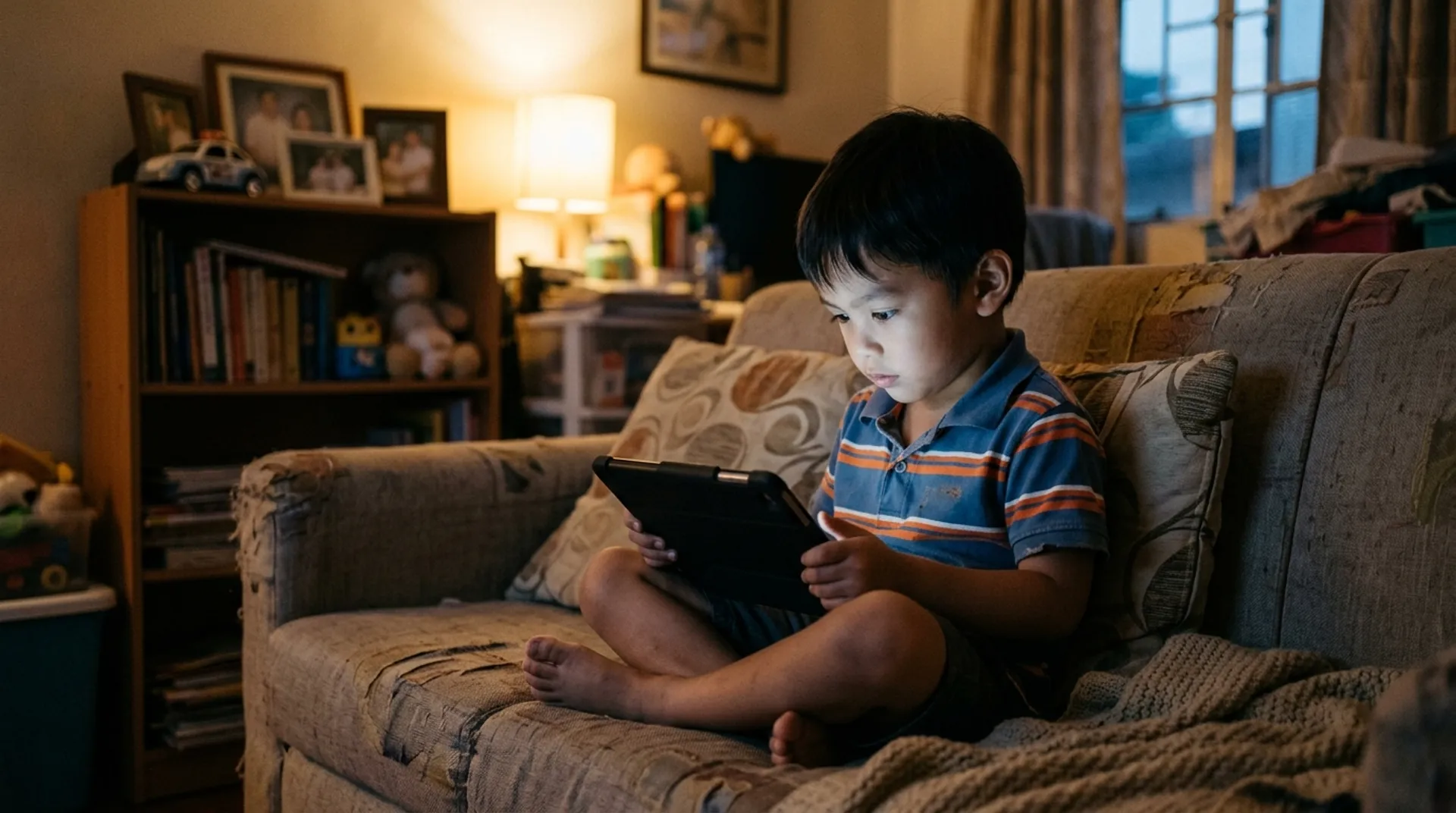 Screen time is not a single issue — it affects children differently depending on their age, the type of content they consume, and whether a parent or caregiver is present. Here is what Filipino parents need to understand about the specific ways excessive screen use can affect a growing child.
Language and Communication Delays
For children under 3 years old, the window of language acquisition is critical. Passive screen viewing — watching videos without interaction — does not stimulate the back-and-forth verbal exchange that builds language. Filipino pediatricians have noted an increase in parents seeking developmental screenings specifically for speech concerns, many of which are linked to long periods of unsupervised screen use during the toddler years.
Sleep Disruption
The blue light emitted from screens suppresses melatonin — the hormone that signals the body it is time to sleep. Children who use gadgets within an hour of bedtime consistently experience shorter sleep duration and poorer sleep quality. For Filipino kids whose mealtimes and bedtimes are often flexible due to extended family dynamics and busy household schedules, this problem is especially pronounced.
Reduced Physical Activity
Time spent on screens directly displaces time that could be spent moving, playing outdoors, and developing gross motor skills. The World Health Organization links excessive sedentary screen behavior in children directly to reduced cardiovascular fitness, weakened muscles, and higher risk of childhood obesity. Filipino children who were already limited in outdoor play during the pandemic years are still feeling the effects of this physical activity gap.
Emotional and Behavioral Effects
Parents in various Filipino studies identified aggressive behavior, hyperactivity, and poor communication as the top behavioral changes they observed in children with prolonged screen time. Tantrums when gadgets are taken away, difficulty focusing on non-screen activities, and reduced interest in imaginative play are all commonly reported by Filipino moms in parenting groups and community surveys.
Cyberbullying and Online Safety Risks
For older children and teenagers, the risks shift from developmental to social and emotional. A UNICEF study found that Filipino children and adolescents have grown increasingly vulnerable to cyberbullying, body image pressures, and online harassment due to social media exposure. In response, a Senate bill was filed in 2025 proposing age restrictions on social media use by minors in the Philippines — a sign that government authorities are now taking these risks seriously at a policy level.
Signs That Your Child May Have Too Much Screen Time
As a Filipino mom juggling work, household responsibilities, and childcare, it can be hard to step back and assess your child’s digital habits objectively. Here are some concrete signs that screen time may be affecting your child’s health or development:
Tantrums or intense distress when gadgets are taken away — beyond what is typical for their age and temperament.
Reduced interest in other activities — toys that were once favorites are now ignored; outdoor play feels boring to them.
Speech or language concerns — delayed first words, limited vocabulary for their age, or difficulty expressing themselves verbally.
Sleep problems — trouble falling asleep, waking up in the middle of the night, or appearing tired and irritable in the morning.
Poor eye contact and reduced social interaction — preferring screen time to playing or talking with family members.
Eating only when in front of a screen — a habit common in Filipino households that conditions children to associate eating with entertainment, making mealtimes impossible without a gadget.
If you recognize several of these signs in your child, it does not mean you are a bad mother. It means you are a mama who is paying attention — and that is already the first step. For more guidance on building a nurturing environment, read our article on mindful parenting for Filipino moms and how to foster emotional intelligence.
Practical Tips for Managing Screen Time at Home
 Setting screen time boundaries in a Filipino household is not always straightforward. We live with extended family, have working parents, rely on screens for school, and sometimes use gadgets as a practical tool to keep a child occupied while you finish work or prepare a meal. The goal is not perfection — it is intentionality.
Set Clear, Age-Appropriate Rules and Stick to Them
Post your family’s screen time rules somewhere visible — the ref door, the sala wall, or even as a phone wallpaper reminder. Keep them simple: “No screens before breakfast,” “One hour of YouTube after homework,” “No gadgets after 8 PM.” Consistency matters more than strictness. Children thrive on predictable rules because it helps them feel safe and in control, as we also discussed in our post on the ultimate guide to raising happy and healthy kids.
Watch Together — Do Not Just Limit
Research consistently shows that co-viewing — watching or engaging with content alongside your child — reduces the negative effects of screen time significantly. Ask questions about what they are watching. Connect the cartoon to real life. Turn passive viewing into an active learning conversation. This also gives you real-time insight into the type of content your child is consuming.
Create Screen-Free Zones and Times
Designate specific spaces and times in your home where screens simply do not exist. The dining table during mealtimes. The bedroom after a set bedtime. The hour before the child sleeps. These boundaries protect sleep, support family connection, and give your child’s brain the downtime it needs to process the day. Use this time for traditional Filipino bonding — storytelling, simple board games, or preparing merienda together in the kitchen.
Be the Example You Want to See
This one is hard to hear, but it is the most important tip on this list. You cannot ask your child to put down their phone if you are scrolling through Facebook at the dinner table. Your screen habits directly shape theirs. When you choose to be present — without a gadget in your hand — you are teaching your child something no educational app can replicate. You are teaching them that real life, real people, and real moments are worth their full attention.
Use Parental Controls and Monitoring Apps
For older children with their own devices, parental control tools are a practical layer of protection. Both Android and iOS offer built-in screen time monitoring features — Screen Time on iPhone and Digital Wellbeing on Android — that allow you to set daily limits per app, schedule downtime, and block inappropriate content. Set these up together with your child so the rules feel like a shared family agreement rather than a punishment.
Replace Screen Time with Engaging Alternatives
Children turn to screens because screens are interesting. The antidote is not boredom — it is offering equally engaging, age-appropriate alternatives. Outdoor play. Arts and crafts with simple materials. Reading picture books or komiks. Cooking simple snacks together. Board games as a family. The more rich and stimulating your child’s offline world is, the less they will feel the pull of the screen.
A Word to Filipino Moms Who Feel Guilty
 Kung minsan, ang gadget ang nagbibigay sa atin ng limang minuto ng kapayapaan. And that is okay. There is no Filipino mom alive who has never handed a phone to a fussy toddler in the middle of a video call, or pressed play on a YouTube video just to get five minutes to breathe. Survival mode is real. The demands of motherhood in the Philippines — especially for working moms, solo parents, and mothers of OFW spouses — are immense.
The research on screen time is not meant to judge you. It is meant to inform you, so that the choices you make can be as intentional as possible. A little screen time, used wisely, is not going to permanently damage your child. What matters is the pattern — the daily habit, the content quality, and whether you are present and engaged even when screens are on.
You are already doing something right by reading this. You care. You are asking questions. That is exactly what a good mama does. For more encouragement and strategies on taking care of yourself while taking care of your children, visit our guide on why self-care is crucial for every mom.
Moving Forward: Building Healthier Digital Habits as a Family
Managing screen time in 2025 is not about going back to a gadget-free world — that ship has sailed. It is about raising children who have a healthy, balanced relationship with technology: children who can enjoy digital content without being consumed by it, and who grow up knowing that the best moments in life happen when the screens are off.
Start small. Pick one rule this week. Maybe it is no gadgets at the dinner table. Maybe it is watching one episode together instead of letting autoplay run for hours. Maybe it is going for a short walk after school instead of going straight to YouTube. Small, consistent changes build lasting habits — in your children, and in your family as a whole.
For further reading on child development research specific to the Philippines, the Ateneo de Manila University’s award-winning screen time study is an excellent, locally grounded resource. And if you are looking for broader guidance on keeping your children physically and emotionally healthy, our full parenting resource library is always here for you.
Kaya mo ito, mama. One intentional moment at a time.